A career measured in fit
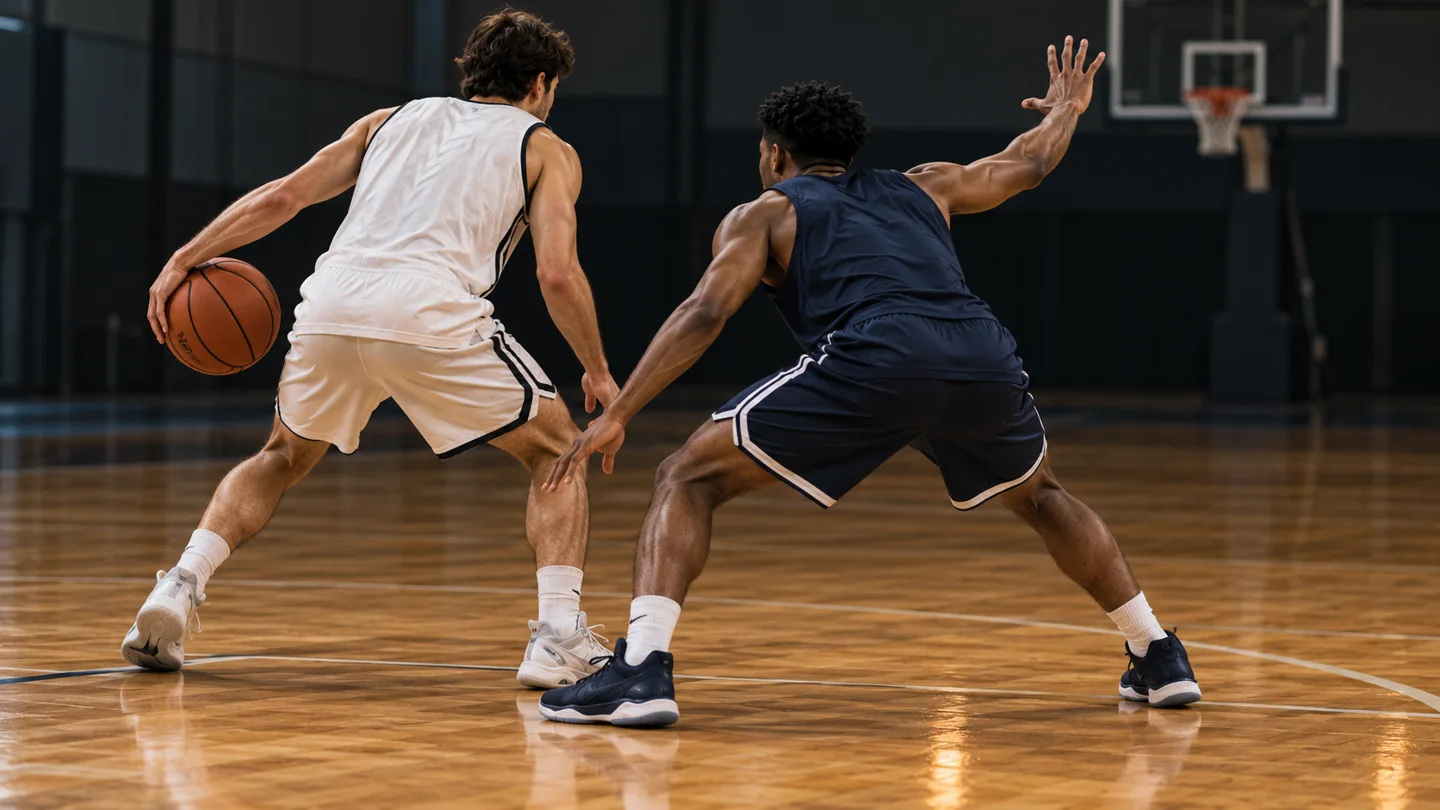
Tayshaun Prince's NBA career is a useful correction to the idea that basketball value always announces itself. His best work often appeared between the obvious events: the extra step that closed a driving lane, the pass that let a teammate attack, the defensive assignment that allowed another player to conserve energy. He was a small forward whose size changed the geometry of a possession, but his importance was also practical. Coaches could place him alongside players with stronger scoring identities and still expect the lineup to make sense. That reliability connects his college development, Detroit peak, later stops, and eventual work in basketball operations.
The broad record is clear. Detroit selected Prince with the 23rd pick in the 2002 NBA Draft. His professional playing career ran through the 2015–16 season, with Detroit, Memphis, Boston, and Minnesota on the itinerary. The championship came in 2004; Olympic gold followed with the United States in 2008. Those milestones describe a successful career, but they do not explain it. To understand Prince, it helps to examine how his responsibilities changed while his underlying basketball habits remained useful.
Kentucky supplied more than a résumé
Prince spent four seasons at Kentucky, where the demands of a prominent college program gave his game room to develop beyond one specialty. The later NBA reputation emphasizes defense, yet his college story includes significant offensive responsibility. That distinction matters. A player who has been asked to create shots can understand what an opposing scorer wants to accomplish; a player comfortable making offensive decisions is less likely to become a passenger when the ball comes his way.
His 41-point NCAA Tournament performance against Tulsa in 2002 is a particularly strong reminder that the familiar Detroit role was a professional adaptation, not the limit of his skill set. College success did not guarantee immediate NBA prominence. The league would ask him to operate against faster guards, stronger forwards, and schemes that exploited hesitation. Kentucky provided a foundation; Detroit required a different balance of scoring ambition and defensive responsibility. Our Kentucky retrospective examines that distinction rather than treating college as a short preface.
The rookie season was a beginning, not a verdict
Prince's first Detroit season did not resemble the stable starting role fans associate with the championship lineup. The lesson is not that every lightly used rookie becomes an essential player. It is that a rookie's early opportunities reflect the needs of an existing team as well as individual readiness. Detroit already intended to compete. Development took place inside that competitive setting, where a young forward had to earn minutes without disrupting what established teammates were doing.
His emergence during the 2003 postseason helped show why length on the wing could matter immediately. A defender who can contest without needing to stand directly on top of a shooter changes the options available to a coach. That does not make him immune to screens or physical matchups. It does give the team another way to organize its coverage. Prince's early progress is best read as a growing fit between a distinctive body type, improving judgment, and a roster that needed both.
Detroit made his role legible
The championship-era Pistons gave Prince a setting in which complementary skills were central to success. Chauncey Billups directed possessions. Richard Hamilton created pressure through movement. Ben Wallace supplied interior resistance and rebounding. Rasheed Wallace offered size and offensive range. Prince's work linked the perimeter to that frontcourt. He could take demanding wing assignments, help finish possessions, and contribute on offense without insisting that the team begin every trip with him.
Calling him a glue player is only helpful if the description includes actual responsibilities. He still had to score when defenses offered space, make the next pass on time, and defend skilled opponents who could punish a slow first step. The Detroit years show how those tasks interacted. His relative quietness in the scoring hierarchy should not be confused with a light workload. A low-usage offensive role can accompany an exceptionally demanding defensive one.
A championship without a solo narrative
The 2004 title remains the center of his playing legacy. It also resists a simple individual explanation. Prince belonged to a starting group whose members solved different problems, and his contribution depended on the quality of those relationships. Detroit's defense gave him support behind the play; his perimeter resistance helped keep that support from being overwhelmed. The offensive system gave him opportunities without requiring constant self-creation.
The famous recovery against Reggie Miller made that value visible in a single sequence. Most possessions did not offer such a clean illustration. In ordinary playoff minutes, his work might be a contested catch, a recovered closeout, or an avoided rotation. Remembering the highlight alongside those less dramatic duties produces a fuller account of the championship. A signature play can introduce a career, but it cannot stand in for the habits that sustained it.
Recognition and the international stage
Prince earned four consecutive NBA All-Defensive Second Team selections, covering the 2004–05 through 2007–08 seasons. The distinction records league recognition of a sustained defensive reputation. It is more informative than assigning him an unsupported all-time ranking, and it should not be confused with winning Defensive Player of the Year. Different awards answer different questions. Prince's case rests on valuable wing defense within a successful team, not on borrowing accolades associated with a teammate.
The 2008 Olympic team put his complementary skills in another environment. A national roster filled with prominent scorers still needs players who can accept assignments, defend, and keep possessions connected. International selection does not prove every tactical claim made about a player. It does underline that his value could travel beyond Detroit's specific lineup. His career invites readers to distinguish between the amount of attention a role receives and the amount of trust it requires.
Memphis and the changing veteran role
The 2013 move to Memphis brought Prince into another team associated with defense and physical half-court basketball. It was a different roster, not a recreation of Detroit. His veteran experience could be useful without making him the same player he had been at his athletic peak. Later periods with Boston, a return to Detroit, and a final playing season in Minnesota show the ordinary changes that accompany a long NBA career: different minutes, different teammates, and different expectations.
Evaluating those years fairly means resisting two shortcuts. One is to treat every later performance as evidence that the peak was overrated. The other is to assume that reputation preserves a player's earlier impact indefinitely. Aging changes recovery speed and the ability to absorb repeated assignments. Decision-making may remain valuable even when physical margins narrow. Prince's later career belongs in the record because it shows adaptation, not because every stop must be presented as another championship chapter.
Basketball knowledge after the last season
Prince moved into Memphis basketball operations after his playing career, joining the organization in 2017 and receiving a vice president promotion in 2019. Those are dated career milestones, rather than a claim about his title today. They indicate another use for accumulated experience: understanding players, roles, and the decisions that shape a roster. Playing successfully and evaluating talent are different jobs; a long playing résumé does not automatically make every executive decision correct.
What connects the two stages is the importance of context. Prince's own career demonstrated that a player's usefulness can depend on teammates, assignments, and the style a team wants to play. That makes his retrospective more interesting than a list of totals. He offers a case study in the value of fit, the patience of development, and the durability of skills that help other players function. The career is remembered most clearly when the championship is treated as its brightest chapter, while the whole record remains in view.
Records & further viewing
- NBA player record and draft information
- Season-by-season playing history
- Memphis executive promotion announcement, 2019
- FIBA Olympic player record
Sources checked September 30, 2026. Atmospheric illustrations are AI-generated; no interviews or firsthand access are claimed.