Length was a tool, not a complete system
Tayshaun Prince's defensive reputation begins with his unusually long frame. A tall wing with extended reach can contest shots and passes from spaces that feel safe against a smaller opponent. That advantage is real, but it does not explain defense on its own. The useful question is how Prince combined his physical tools with movement and judgment. A player can have impressive reach and still arrive late, open the wrong driving lane, or leave the team scrambling behind him.
This article offers tactical interpretation rather than a possession-by-possession statistical study. It does not claim to measure how many shots Prince changed or assign a precise value to his wingspan. Instead, it describes the basketball mechanisms that made his type of defense valuable, then considers the offensive skills that kept a defense-oriented wing useful in a complete lineup. His career record supplies the chronology; the focus here is the game itself.
A contest can begin before the shot
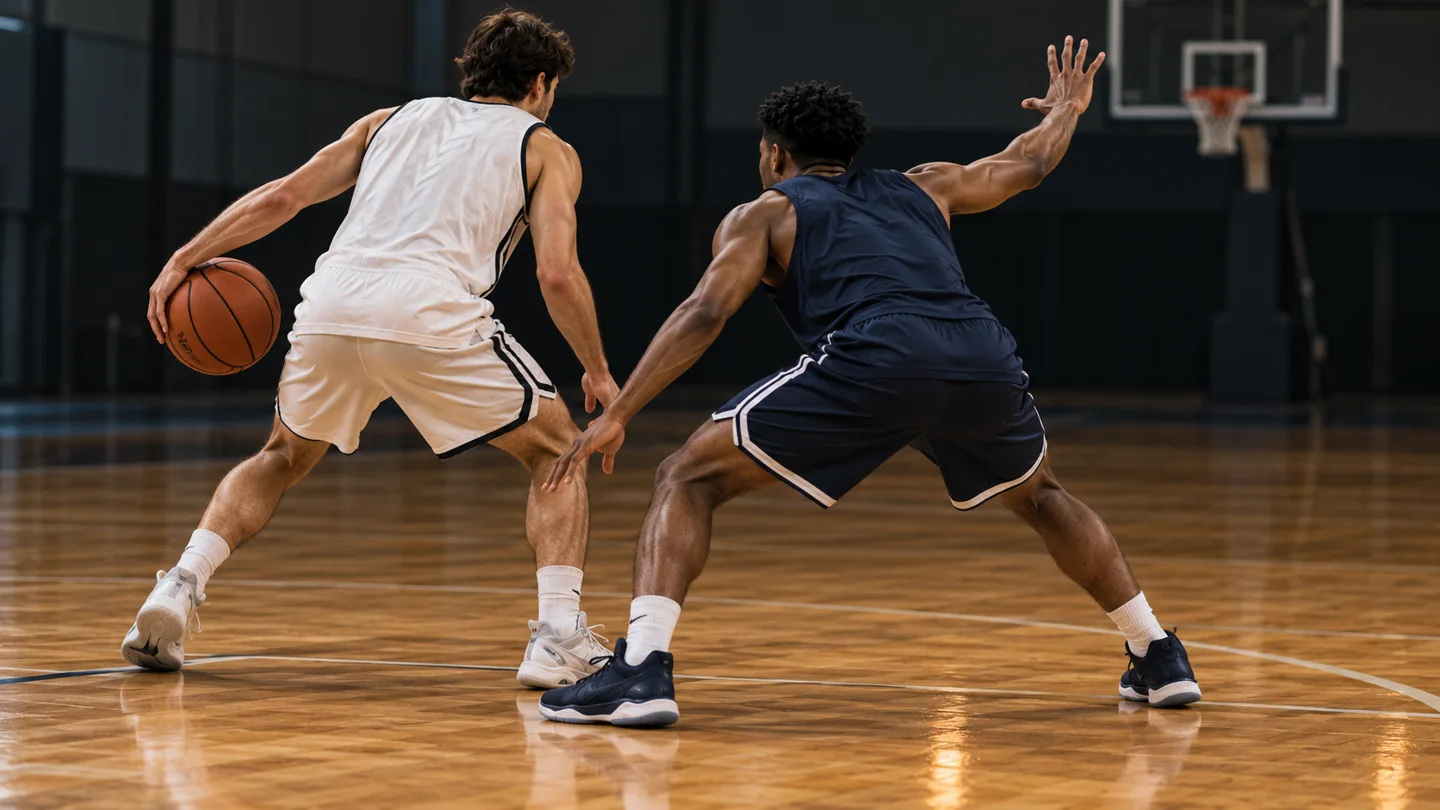
Defensive influence is not limited to the moment a hand meets a release. A long defender can affect the receiver's preferred catch, the passing angle, and the amount of space available for the first move. If the offensive player catches farther from a comfortable spot, the rest of the possession may become harder. That outcome does not produce a block or a steal, yet it can still be useful.
Prince's dimensions gave him options in that early stage. He could threaten a passing lane while maintaining a relationship with his assignment. The challenge was to use that reach without overcommitting. An unsuccessful gamble may surrender the very advantage the defender was trying to create. Good wing defense often requires making the offense feel constrained while keeping enough balance to respond to the next movement.
The first angle shapes the help behind it
A perimeter defender rarely operates without consequences for teammates. If he gives up a direct path to the rim, an interior defender may have to step out, exposing a pass behind the help. If he slows the attacker or channels the drive toward a prepared area, the next defender can respond with more control. The difference is not simply effort; it is the shape of the initial resistance.
This is one reason Prince's Detroit context matters. Ben Wallace and Rasheed Wallace offered significant support behind him, but that support was most useful when the perimeter action remained manageable. A good defensive pairing is reciprocal. The wing makes the big man's decision easier, while the big man's presence affects which risks the wing can take. Our Detroit analysis looks at those relationships across the starting lineup.
Recovery is a second chance, not the first plan
The Reggie Miller block is the obvious example of Prince's recovery ability. Its fame can lead to a misleading lesson: allow the attacker ahead, then rescue the possession. Recovery defense is valuable precisely because basketball produces imperfect situations. It should not become an excuse to ignore stance, preparation, or the initial angle. A team would rather avoid the emergency than depend on a spectacular solution every time.
Prince's reach expanded what remained possible after an opponent gained separation. He did not always need to return completely level with a player to contest the ball. That margin is important, especially in transition. But timing still determined whether the advantage could be used legally and effectively. The signature-play study isolates that mechanism without treating a single highlight as representative of every defensive possession.
Patience can reduce the offense's choices
A scorer wants a defender to react prematurely: rise on a fake, reach across the body, or turn the hips before the direction is settled. Discipline makes those invitations less rewarding. Length can support patience because the defender may retain a useful contest even without crowding every inch of space. That does not eliminate the need for quick feet; it changes the balance between proximity and reach.
The danger at the other extreme is excessive caution. A defender who gives unlimited room may allow comfortable shots, and a passive stance can let an attacker build momentum. Effective patience is active. It involves tracking the ball, adjusting position, and recognizing when a challenge must happen. Prince's defensive appeal lies in that combination of physical margin and controlled response, rather than in a general instruction to stay still and wait.
Versatility needs a precise definition
Prince could be useful against different types of wings, but versatility should not be exaggerated into a claim that every position was an equally favorable assignment. A quick guard, a powerful forward, and a post-oriented big create different demands. Size helps with some of them and does less against others. The value of a versatile defender is that a coach has more credible options, not that matchup differences disappear.
Switching, showing help, and recovering to an assignment also involve several teammates. Modern viewers may project today's switching vocabulary onto an older team without checking how that team actually operated. A careful analysis uses broad principles without pretending that Detroit followed every current convention. Prince's skills are relevant to modern basketball, but relevance is not a license to rewrite the schemes of his era.
Finishing the possession belongs to defense
A strong contest loses value if the opponent collects the rebound and immediately scores. Wing defenders have to respond when the shot goes up: identify a body, locate the ball, and decide whether to pursue the rebound or protect against a new action. Prince's height could help with that responsibility, but size alone does not establish good rebounding position.
The broader point is that defensive work continues beyond the first action. Helping and recovering, then locating a rebound, requires attention to changing priorities. A player praised only for the initial matchup may still damage the team by switching off later in the possession. The best way to watch a defender is therefore to follow the whole sequence rather than stopping when the offensive player releases the ball.
His offense protected his defensive usefulness
Prince was not a high-volume offensive centerpiece in Detroit, yet he could use a size advantage, make a pass, and score within the possession. Those skills affected the team's ability to keep him on the floor. If a defender contributes nothing offensively, opponents can shift extra attention elsewhere. A wing with enough offensive competence makes that tradeoff less comfortable.
His left-handed game and deliberate approach offered a different rhythm from Detroit's guards. A favorable post matchup could turn his frame into an offensive advantage, while a simple reversal could preserve the action. Neither decision was automatically correct. The useful habit was choosing based on what the defense allowed, rather than insisting on proving a scoring identity every trip. That restraint is part of a two-way profile, not evidence that offense was irrelevant.
How to watch for his kind of impact
Start a possession before the catch. Notice the distance between the wing and the ball, then follow the first defensive angle. Watch which teammate is prepared to help and whether the initial pressure makes that help necessary. After a shot, keep watching. The rebound and the next action can reveal as much about defensive responsibility as the contest itself.
This method explains why Prince remains interesting beyond a single famous play. His tools changed what a possession could become, while his decisions helped a lineup keep its structure. The lasting lesson is not that reach solves defense. It is that reach becomes valuable when it serves positioning, timing, and a shared plan. His offense completed the picture by keeping that defensive contribution attached to a usable five-player team.
Records & further viewing
Sources checked September 30, 2026. Atmospheric illustrations are AI-generated; no interviews or firsthand access are claimed.